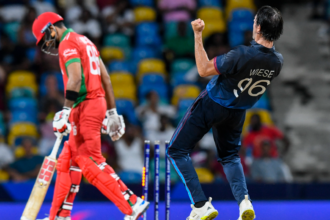
The rivalry between the New Zealand National Cricket Team and the Zimbabwe National Cricket Team showcases a journey of dominance, resilience, and evolving competition. While New Zealand has historically held the upper hand, Zimbabwe has produced competitive moments that added intrigue to their encounters. This timeline highlights key phases, memorable matches, and the steady growth of both teams in international cricket.
Latest Matches
Tournament
Venue
Date
Toss
Zimbabwe Score
New Zealand Score
Result
Series
Player of the Match
Bilateral Test
Queens Sports Club, Bulawayo
Aug 7-9, 2025
Zimbabwe won toss & elected to bat
125 (48.5 overs) & 117 (28.1 overs)
601/3 d (130 overs)
New Zealand won by an innings & 359 runs
New Zealand tour of Zimbabwe 2025 Test Series
Devon Conway (NZ)
Bilateral Test
Queens Sports Club, Bulawayo
Jul 30-Aug 1, 2025
Zimbabwe won toss & elected to bat
149 (60.3 overs) & 165 (67.1 overs)
307 (96.1 overs) & 8/1 (2.2 overs)
New Zealand won by 9 wickets
New Zealand tour of Zimbabwe 2025 Test Series
Matt Henry (NZ)
Zimbabwe Twenty20 Tri-Series 2025
Harare Sports Club, Harare
Jul 24, 2025
n/a
130 (18.5 overs)
190/6 (20 overs)
New Zealand won by 60 runs
Zimbabwe Twenty20 Tri-Series 2025
Ish Sodhi (NZ)
Zimbabwe Twenty20 Tri-Series 2025
Harare Sports Club, Harare
Jul 18, 2025
n/a
120/7 (20 overs)
122/2 (13.5 overs)
New Zealand won by 8 wickets
Zimbabwe Twenty20 Tri-Series 2025
n/a
Latest ICC & Asia Cup Encounters
Tournament
Venue
Date
Afghanistan Score
Bangladesh Score
Result
Men’s T20 Asia Cup 2025
Sheikh Zayed Stadium, Abu Dhabi
Sep 16, 2025
146 (20 overs)
154/5 (20 overs)
Bangladesh won by 8 runs
ICC Men’s T20 World Cup 2024 (Super 8)
Arnos Vale Ground, Kingstown
Jun 25, 2024
115/5 (20 overs)
105 (17.5 overs)
Afghanistan won by 8 runs (DLS)
Men’s T20 Asia Cup 2022
Sharjah Cricket Stadium
Aug 30, 2022
131/3 (18.3 overs)
127/7 (20 overs)
Afghanistan won by 7 wickets
Asia Cup 2023 (ODI)
Lahore
Sep 3, 2023
n/a
n/a
Bangladesh won by 89 runs
Most Memorable Individual Performances
Rank
Player
Performance Details
Match Details
Impact on Result
1
Rashid Khan (AFG)
4/18 in 4 overs
Bilateral T20I, Sharjah, Oct 2025
Key in tight chases
2
Naveen-ul-Haq (AFG)
4/26
T20 World Cup 2024 Super 8
Bowled out Bangladesh for 105
3
Nasum Ahmed (BAN)
Match-winning figures
Asia Cup 2025 T20I, Abu Dhabi
Restricted Afghanistan to 146
4
Litton Das (BAN)
Unbeaten 54
T20 World Cup 2024
Top-scored in losing cause
5
Rahmanullah Gurbaz (AFG)
82 runs (highest in series)
Bilateral T20I series, UAE 2025
Aggressive starts in powerplay
Overall Head-to-Head Summary
Format
Matches Played
Afghanistan Wins
Bangladesh Wins
No Result
Recent Trend (Last 5 Matches)
T20Is
12+
7
5
0
Bangladesh won 3 of last 3 (2025)
ODIs
Multiple
Close
Competitive
Rare
Afghanistan strong in 2024 series
Asia Cup / ICC
5+
2
3
0
Mixed results with low-scoring thrillers
Early Encounters and Zimbabwe’s Entry (1992–1999)
The rivalry began in the early 1990s when Zimbabwe gained Test status and started competing regularly against established teams like New Zealand. New Zealand entered these matches with more experience and a structured cricketing system, which gave them a clear advantage. Zimbabwe, however, showed determination and resilience, often putting up competitive performances despite limited resources. Matches during this period were generally controlled by New Zealand, particularly due to their balanced squad and disciplined gameplay. Zimbabwe used these encounters as learning opportunities, gradually improving their skills and gaining confidence. This era laid the foundation of the rivalry, with New Zealand establishing early dominance while Zimbabwe focused on development.
Year
Event
Winner
Venue
1992
First ODI
New Zealand
New Zealand
1996
World Cup
New Zealand
India
1999
World Cup
New Zealand
England
Zimbabwe’s Competitive Peak (2000–2003)
The early 2000s marked Zimbabwe’s strongest phase in international cricket. During this time, matches against New Zealand became more competitive and closely contested. Zimbabwe had a talented group of players capable of challenging strong teams, and they managed to push New Zealand in several encounters. Although New Zealand still held an advantage overall, Zimbabwe’s performances during this period were impressive. Matches often went down to the wire, showcasing the growing competitiveness of the rivalry. This era represented the closest contest between the two teams, highlighting Zimbabwe’s potential and ability to compete at the highest level.
Year
Series/Event
Winner
Highlight
2000
Test Series
New Zealand
Close Matches
2001
ODI Series
Zimbabwe
Key Victory
2003
World Cup
New Zealand
Competitive Game
New Zealand’s Control and Consistency (2004–2012)
From 2004 to 2012, New Zealand reasserted its dominance over Zimbabwe. Zimbabwe faced several internal challenges, including player exits and administrative issues, which affected their performance. New Zealand capitalized on this situation, winning most matches comfortably across formats. Their experienced players and strong team structure ensured consistent success. Matches during this period were often one-sided, with Zimbabwe struggling to keep pace. Despite the results, Zimbabwe continued to participate and gain experience, working towards rebuilding their squad. This phase highlighted the gap between the two teams and reinforced New Zealand’s superiority in the rivalry.
Year
Format
Winner
Highlight
2005
Test Series
New Zealand
Dominant Wins
2008
ODI Series
New Zealand
Strong Batting
2011
ICC Event
New Zealand
Consistency
Zimbabwe’s Fightback Moments (2013–2015)
Between 2013 and 2015, Zimbabwe showed signs of improvement and delivered some competitive performances against New Zealand. While New Zealand remained the stronger side, Zimbabwe managed to challenge them in certain matches, especially in limited-overs formats. These encounters brought renewed excitement to the rivalry, as Zimbabwe demonstrated resilience and determination. Although victories were still mostly in New Zealand’s favor, Zimbabwe’s fighting spirit added unpredictability to the contests. This period helped revive interest in the rivalry and highlighted Zimbabwe’s potential to rebuild and improve.
Year
Event
Winner
Highlight
2013
ODI Match
New Zealand
Competitive Game
2014
T20 Match
New Zealand
Close Finish
2015
Bilateral Series
New Zealand
Zimbabwe Effort
Modern Era and Balanced Performances (2016–2020)
From 2016 to 2020, the rivalry saw more balanced performances, particularly in limited-overs formats. New Zealand continued to dominate overall, but Zimbabwe managed to deliver competitive games and occasionally push matches to tight finishes. New Zealand’s depth and experience often proved decisive, while Zimbabwe’s young players showed promise. Matches during this period were more engaging, reflecting Zimbabwe’s gradual improvement. This era demonstrated that while New Zealand remained ahead, Zimbabwe was capable of challenging them and making contests more interesting.
Year
Series/Event
Winner
Highlight
2016
ODI Series
New Zealand
Close Matches
2018
T20 Series
New Zealand
Competitive Games
2020
Bilateral Series
New Zealand
Consistency
Recent Years and Emerging Talent (2021–Present)
In recent years, the New Zealand vs Zimbabwe rivalry has continued with the emergence of new talent on both sides. New Zealand remains a strong cricketing nation with consistent performances across formats. Zimbabwe has shown signs of rebuilding, developing young players and improving their competitiveness. Matches have become more dynamic, with Zimbabwe occasionally challenging New Zealand in key moments. The rivalry now reflects a blend of experience and growth, with both teams aiming to improve their standings in international cricket. This period highlights the evolving nature of the rivalry and the potential for more exciting encounters in the future.
Year
Series/Event
Winner
Highlight
2021
T20 Series
New Zealand
Strong Play
2022
ODI Series
New Zealand
Dominance
2023
Bilateral Series
n/a
Competitive Matches
Key Players and Memorable Contributions
The rivalry has been shaped by several notable players who delivered outstanding performances. New Zealand legends like Martin Crowe and Kane Williamson have played crucial roles in maintaining dominance. Zimbabwe has relied on players like Andy Flower and Sikandar Raza to compete against stronger opposition. These players have influenced matches with their skills and leadership. Individual brilliance has often been the highlight of this rivalry, adding excitement and depth. Their contributions ensure that each encounter remains engaging and memorable for fans.
Player
Team
Era
Contribution
Martin Crowe
New Zealand
1990s
Strategic Leader
Kane Williamson
New Zealand
Modern Era
Consistent Batter
Andy Flower
Zimbabwe
1990s–2000s
Batting Legend
Sikandar Raza
Zimbabwe
Modern Era
All-round Impact
Future Outlook and Rivalry Significance
The future of the New Zealand vs Zimbabwe rivalry looks promising as both teams continue to evolve. New Zealand’s strong cricketing system ensures continued success, while Zimbabwe’s rebuilding efforts indicate potential growth. Increased opportunities through ICC tournaments and bilateral series will strengthen this rivalry further. As Zimbabwe improves consistency, matches are expected to become more competitive and engaging. This rivalry reflects the global development of cricket, where both established and emerging teams contribute to the sport’s growth and excitement.
Aspect
New Zealand
Zimbabwe
Impact
Strength
Experience & Depth
Emerging Talent
Competitive Matches
Challenge
Maintaining Consistency
Rebuilding
Growth
Future
Strong Contender
Rising Team
Exciting Rivalry
Conclusion
The timeline of the New Zealand National Cricket Team vs Zimbabwe National Cricket Team rivalry reflects a journey of dominance, resilience, and gradual progress. New Zealand has consistently led the rivalry with strong performances and experienced players, while Zimbabwe has contributed moments of competitiveness and determination. From early encounters to modern-day matches, the rivalry has evolved significantly. As Zimbabwe continues to rebuild and New Zealand maintains its strength, future encounters promise greater excitement. This rivalry remains an important part of international cricket, showcasing the growth of emerging teams and the enduring quality of established cricketing nations.