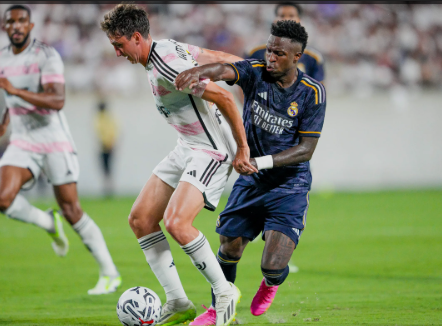
The rivalry between Real Madrid and Juventus FC stands as one of European football’s most compelling narratives, built on decades of high pressure clashes, tactical battles, and unforgettable scorecards. From early encounters to iconic finals, every match has carried weight beyond the pitch, shaping legacies and defining generations of players. This is not just a story of wins and losses, but of contrasting styles, Spanish flair against Italian discipline. Each chapter reveals how moments, decisions, and individual brilliance have influenced outcomes, creating a rivalry that continues to captivate fans and redefine excellence at the highest level of football.
Latest Matches
urnament
Venue
Date
Real Madrid Score
Juventus Score
Result
Competition
Player of the Match
Champions League
Madrid
Oct 22, 2025
1
0
Real Madrid won by 1-0
League Phase
Jude Bellingham (RMA)
Champions League
Madrid
Jul 1, 2025
1
0
Real Madrid won by 1-0
Round of 16
Vinícius Júnior (RMA)
Friendly
Orlando
Aug 3, 2023
1
3
Juventus won by 3-1
Soccer Champions Tour
Dušan Vlahović (JUV)
Friendly
Pasadena
Jul 31, 2022
2
0
Real Madrid won by 2-0
Soccer Champions Tour
Karim Benzema (RMA)
Champions League
Madrid
Apr 11, 2018
1
3
Juventus won by 3-1
Quarter-Finals
Mario Mandžukić (JUV)
Champions League
Turin
Apr 3, 2018
3
0
Real Madrid won by 3-0
Quarter-Finals
Cristiano Ronaldo (RMA)
Champions League
Cardiff
Jun 3, 2017
4
1
Real Madrid won by 4-1
Final
Cristiano Ronaldo (RMA)
All-Time Head-to-Head Record
Metric
Stat
Total Matches
22
Real Madrid Wins
11
Juventus Wins
9
Draws
2
Real Madrid Goals
27
Juventus Goals
25
Top Goal Scorers (Head-to-Head)
Rank
Player
Team(s)
Goals
Key Match
1
Cristiano Ronaldo
Real Madrid
10
2018 UCL Quarter-Final (Bicycle Kick)
2
Alessandro Del Piero
Juventus
5
2008 Bernabéu Standing Ovation
3
Karim Benzema
Real Madrid
3
2022 Soccer Champions Tour
4
David Trezeguet
Juventus
3
2003 UCL Semi-Final
5
Álvaro Morata
Both Teams
3
2015 UCL Semi-Final (for Juventus)
6
Marcelo
Real Madrid
2
2018 UCL Quarter-Final
7
Mario Mandžukić
Juventus
2
2017 UCL Final (Overhead Kick)
8
Filippo Inzaghi
Juventus
2
1998 UCL Final
All-Time Appearance Leaders
Rank
Player
Team
Appearances
Role
1
Gianluigi Buffon
Juventus
13
Goalkeeper
2
Iker Casillas
Real Madrid
10
Goalkeeper
3
Sergio Ramos
Real Madrid
9
Defender
4
Giorgio Chiellini
Juventus
8
Defender
5
Marcelo
Real Madrid
8
Defender
6
Cristiano Ronaldo
Real Madrid
7
Forward
7
Alessandro Del Piero
Juventus
7
Forward
When Giants First Crossed Paths
When Real Madrid and Juventus FC first crossed paths in European competition, it felt less like a regular fixture and more like a meeting of footballing ideologies. Real Madrid carried the flair, confidence, and attacking ambition that defined Spanish football, while Juventus arrived with their trademark Italian discipline, defensive structure, and tactical awareness. Their early encounters in the European Cup were tight, intense, and often decided by small margins, reflecting mutual respect and caution. The scorecards from these matches rarely showed goal fests, but instead revealed battles of patience, positioning, and calculated risk. Midfields became battlegrounds where possession was hard earned, and defenders were celebrated as much as attackers. Fans quickly sensed that this was not just another rivalry, but a collision of history, pride, and continental ambition. Each pass, tackle, and goal carried weight, as both clubs were determined to assert dominance on Europe’s grandest stage, laying the foundation for decades of unforgettable clashes that would follow.
Year
Competition
Result
Venue
Key Highlight
1962
European Cup
Real Madrid 3-1 Juventus
Madrid
Di Stefano masterclass
1986
European Cup
Juventus 1-0 Real Madrid
Turin
Tactical defensive win
1987
European Cup
Real Madrid 1-0 Juventus
Madrid
Narrow comeback victory
1996
Champions League
Juventus 2-0 Real Madrid
Turin
Dominant midfield control
1998
Champions League
Real Madrid 1-0 Juventus
Amsterdam
Title winning performance
The 1998 Final That Changed Everything
The night of the 1998 UEFA Champions League Final wasn’t just about a trophy, it was about destiny shifting in favor of Real Madrid after decades of waiting. Facing a dominant Juventus FC side that had reached consecutive finals, Madrid entered the match as underdogs despite their historic pedigree. Juventus controlled early possession with their experienced midfield, dictating tempo and trying to break Madrid’s defensive shape, but Los Blancos stayed compact and patient. The turning point came in the second half when Predrag Mijatovic found the net, a goal that would echo through history and define the match forever. That single strike separated two giants and ended Madrid’s 32 year European title drought. The scorecard may read 1-0, but the game itself was far more layered, filled with tactical discipline, missed chances, and rising tension with every passing minute. Juventus pushed forward desperately in the closing stages, yet Madrid’s defense held firm under immense pressure. That final whistle didn’t just crown a champion, it ignited a rivalry that would grow fiercer with every future encounter.
Minute
Team
Player
Event
Impact
25
Juventus
Zidane
Playmaker control
Midfield dominance
45
Real Madrid
Roberto Carlos
Defensive block
Kept score level
66
Real Madrid
Mijatovic
Goal
Match winner
78
Juventus
Del Piero
Shot on target
Saved chance
90
Real Madrid
Defense Unit
Clearances
Secured victory
Early 2000s Battles and Tactical Chess Matches
As the rivalry moved into the early 2000s, clashes between Real Madrid and Juventus FC turned into pure tactical chess matches where every move felt calculated and every mistake carried heavy consequences. These were not games decided by flair alone but by discipline, structure, and moments of brilliance under pressure. Juventus leaned heavily on their defensive solidity and midfield control, often slowing the tempo to frustrate Madrid’s attacking rhythm, while Real Madrid relied on quick transitions and individual creativity to break through tight defensive lines. Players like Zinedine Zidane, before his move to Madrid, dictated games with elegance, while Madrid’s attackers looked to exploit even the smallest gaps. Scorecards from this era often reflected close contests, with narrow wins, draws, and low scoring outcomes highlighting how evenly matched both sides were. Each leg in knockout ties felt like a separate battle, where managers adjusted tactics based on previous outcomes, turning the rivalry into a mental as well as physical contest. Fans witnessed not just football, but strategy unfolding in real time, as two European powerhouses constantly tried to outthink and outplay each other.
Season
Stage
Result
Key Player
Tactical Note
2000
Group Stage
Real Madrid 1-0 Juventus
Raul
Counter attacking play
2003
Semi Final
Juventus 3-1 Real Madrid
Del Piero
Midfield dominance
2003
Semi Final
Real Madrid 2-1 Juventus
Ronaldo
Attacking transitions
2005
Round of 16
Juventus 2-0 Real Madrid
Trezeguet
Defensive discipline
2005
Round of 16
Real Madrid 1-0 Juventus
Zidane
Creative control
Galacticos vs Italian Resilience
When the Galacticos era took full shape at Real Madrid, the rivalry with Juventus FC gained a new layer of glamour and intensity. Madrid’s squad was packed with global superstars, players who could change a game in a single moment with skill and imagination, yet Juventus remained unmoved by reputation. They trusted their system, a blend of defensive organization, tactical discipline, and clinical finishing. This contrast made every encounter unpredictable. Madrid often dominated possession and created chances through individual brilliance, but Juventus absorbed pressure with composure and struck back with precision. The midfield battles became iconic, with control constantly shifting and neither side willing to concede space easily. Scorecards during this period reflected that tension, some matches swung in Madrid’s favor through moments of magic, while others saw Juventus grind out results through patience and structure. Fans were treated to a clash of styles, artistry versus resilience, flair versus control. In many ways, this phase defined the rivalry’s identity, proving that football is not just about stars on paper, but about how a team functions under pressure against an equally determined opponent.
Season
Match Type
Result
Key Player
Match Theme
2002
Champions League
Real Madrid 2-1 Juventus
Figo
Attacking flair
2003
Semi Final
Juventus 3-1 Real Madrid
Nedved
Tactical control
2005
Knockout
Juventus 2-0 Real Madrid
Cannavaro
Defensive strength
2006
Friendly
Real Madrid 1-0 Juventus
Beckham
Midfield precision
2008
Group Stage
Juventus 2-1 Real Madrid
Del Piero
Clinical finishing
2003 Semi Final Drama and Emotional Highs
The 2003 UEFA Champions League Semi Final remains one of the most emotionally charged chapters in the rivalry between Real Madrid and Juventus FC, a tie filled with tension, brilliance, and heartbreak. In the first leg at Madrid, Los Blancos leaned on their attacking firepower and secured a 2-1 victory, with Ronaldo’s presence constantly troubling Juventus’ defense. The scorecard suggested a slight edge, but the real story was far deeper, Juventus had done enough to stay alive. The return leg in Turin turned into a night of pure intensity. Juventus came out with aggression, pressing high and disrupting Madrid’s rhythm early. David Trezeguet opened the scoring, igniting belief across the stadium, and Alessandro Del Piero followed with a moment of magic that shifted the balance completely. Madrid looked shaken, their usually fluid attack struggling to cope with Juventus’ relentless pressure. A missed penalty added to their frustration, while Pavel Nedved delivered a commanding performance in midfield, controlling tempo and dictating play. By the final whistle, Juventus had secured a 3-1 victory, overturning the aggregate and booking their place in the final. It was a tie that had everything, skill, pressure, missed chances, and unforgettable performances, leaving fans emotionally drained and firmly cementing this rivalry among Europe’s most intense battles.
Leg
Venue
Result
Key Player
Turning Point
1st
Madrid
Real Madrid 2-1 Juventus
Ronaldo
Early attacking lead
2nd
Turin
Juventus 3-1 Real Madrid
Del Piero
Momentum shift
Aggregate
–
Juventus 4-3 Real Madrid
Nedved
Midfield dominance
Key Moment
Turin
Missed Penalty
Figo
Lost opportunity
Final Impact
–
Juventus Advanced
Team Effort
Tactical superiority
Years of Silence Before the Storm Returned
After the emotional highs of 2003, the rivalry between Real Madrid and Juventus FC entered a quieter phase, but beneath the surface, both clubs were undergoing transformation. These were years of rebuilding, where iconic figures moved on and new identities began to take shape. Real Madrid continued their pursuit of attacking excellence, reshaping their squad with fresh talent while trying to maintain their European dominance. Juventus, on the other hand, faced one of the most challenging periods in their history, dealing with setbacks that forced them to rethink their structure and long term vision. Despite fewer direct encounters, the intensity of the rivalry never truly faded, it simply paused, waiting for the right moment to reignite. Fans from both sides still carried memories of past battles, replaying iconic moments and debating what could have been. The scorecards during occasional meetings in this phase showed glimpses of evolving tactics, with both teams experimenting and adapting to modern football demands. It was a period of quiet preparation, where foundations were rebuilt, strategies refined, and hunger restored, setting the stage for a dramatic return of one of Europe’s most compelling football rivalries.
Period
Team
Key Change
Impact
Future Sign
2004-2006
Real Madrid
Squad rebuild
Inconsistent results
New era forming
2006-2007
Juventus
Relegation setback
Structural reset
Strong comeback
2008
Both Teams
Group Stage Clash
Juventus 2-1 win
Rivalry sparks again
2009-2012
Real Madrid
Tactical evolution
Stronger attack
European ambition
2010-2013
Juventus
Defensive core
League dominance
Return to Europe
Conclusion
As the rivalry between Real Madrid and Juventus FC evolved, it became more than a series of matches, it turned into a legacy shaped by iconic performances, dramatic scorecards, and relentless ambition. Every encounter added a new layer to the story, from tactical masterclasses to emotional victories and crushing defeats. The impact of these battles can still be seen in modern football, influencing strategies and inspiring future stars. While players and managers may change, the essence of this rivalry remains timeless, a symbol of excellence, resilience, and the enduring spirit of competition at the highest level.